Content Quality
Part of Ecommerce organic search
Writing product information beyond a supplier description
Turn verified product facts into useful page copy, explain variant differences and limitations, and keep commerce data aligned.
A supplier description can establish what an item is. A useful product page also answers the questions a shopper needs to decide whether this item fits. Add verified details about the product, its variants and the current offer instead of a longer version of generic supplier copy.
Build a verified product brief
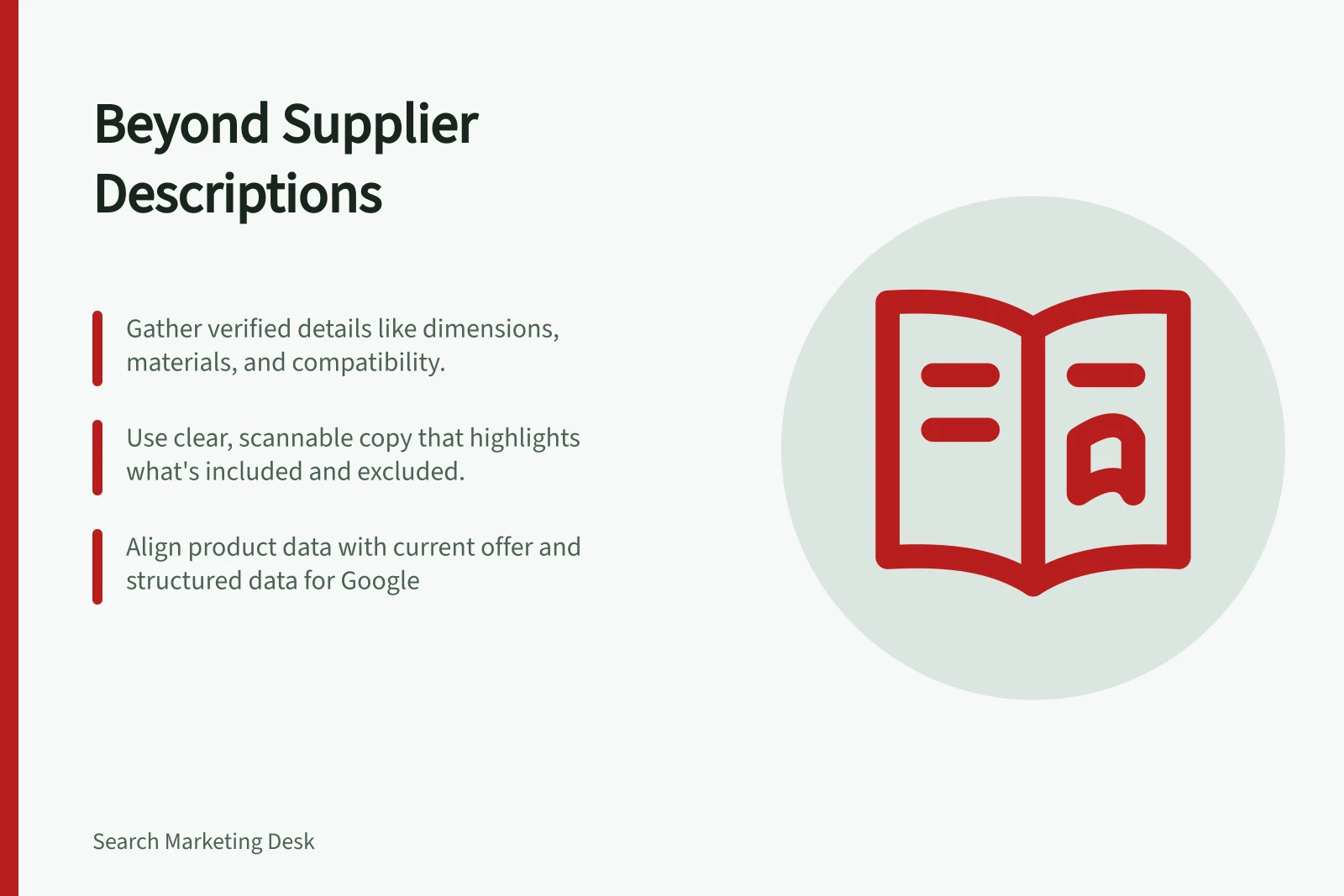
Gather the product name and model, variant differences, dimensions and units, materials, compatibility, package contents, care or installation needs, and relevant limitations. Record where each detail came from, and use the details that matter for the item. If a detail is unknown, seek confirmation or leave it out.
For a laptop sleeve, measured internal dimensions and closure type would usually help more than a claim that it is 'perfect for work'. State device compatibility only when dimensions or manufacturer information support it. Explain any fit limitation a shopper should know.
Write for someone scanning the page
Begin by identifying the item and its distinguishing features. Follow with specifications that can be compared across products. Explain what is included, and what is excluded when that affects the purchase. Place an important limitation next to the feature it qualifies.
Ask whether the same paragraph could describe several products in the range. If it could, add a verified distinction or remove the sentence. Do not repeat the product name to fill space or invent an answer to a customer question the team has not resolved.
Align copy with the offer and product data
Check that the visible variant name, price, availability and purchase controls reflect the current offer.
Product structured data is a separate representation of page information. It can increase eligibility for richer Google Search appearances, but display is at Google's discretion.
Keep it consistent with the visible product and offer. Google distinguishes merchant-listing guidance for pages where shoppers can buy the item from product-snippet guidance for pages where they cannot.
Key product data requirements for Google Search
- Structured data eligibility
- Required for rich results in Google Shopping
- Data consistency
- Must match visible page content
- Google's discretion
- Rich snippets displayed at Google’s choice, not guaranteed
Review when details change
Check the draft against the product brief and the current offer. A reviewer should be able to identify the exact variant, a meaningful constraint and what the shopper would receive. Revisit the page when specifications, packaging, availability or the supplier's model changes.